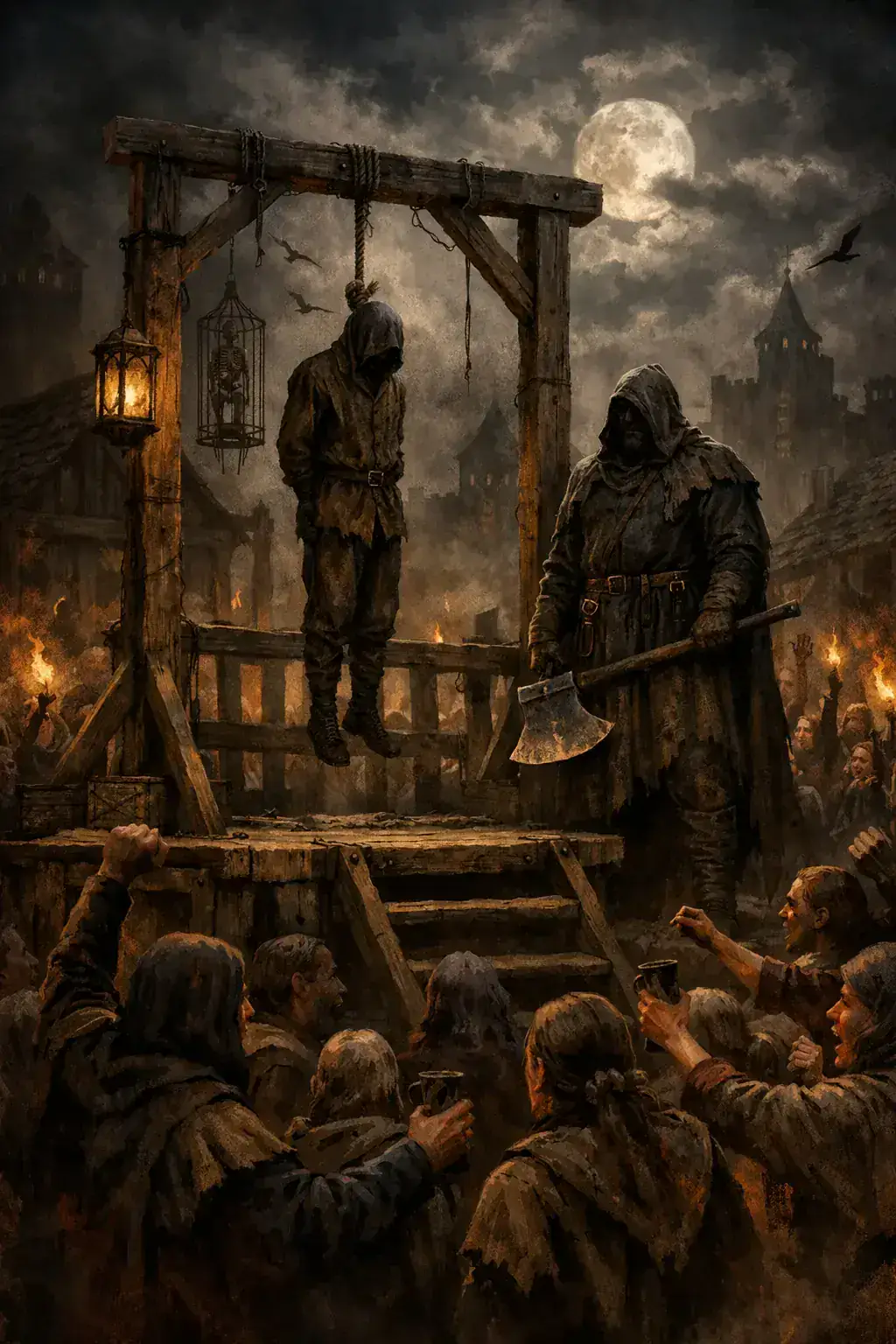
The Theological Framework
The witch trial era required a theology before it could become a history. The Malleus Maleficarum — "The Hammer of Witches" — provided it. Published in 1487 by Heinrich Kramer, an Inquisitor of the Catholic Church, it was a procedural manual for identifying, prosecuting, and executing witches.
The book was condemned by the Cologne Faculty of Theology in 1487 — the year of its publication — and by the Inquisition itself. The author had fabricated clerical approval in his preface. This did not prevent the book from becoming one of the bestsellers of the early printing era. It went through at least 28 editions between 1487 and 1600.
The European Witch Craze
The peak of witch trial executions in Europe occurred between approximately 1560 and 1630 — during the period of maximum religious conflict following the Protestant Reformation. Both Catholic and Protestant jurisdictions conducted witch trials.
The German-speaking territories of the Holy Roman Empire accounted for the majority of executions — an estimated 25,000 to 30,000 out of the European total. The profile of the accused was remarkably consistent: elderly women, often widowed, often economically marginal, often with reputations for unusual behavior or knowledge of folk medicine. Midwives were particularly vulnerable.
The Swimming Test
If the accused floated, the water had rejected them as a servant of the devil, and they were guilty. If they sank, the water had accepted them, and they were innocent — but frequently drowned. The procedure's circularity was not lost on contemporaries.
Floating could be induced by tying the accused in a specific way. Sinking could be prevented by nets or ropes. The procedure was simultaneously proof of guilt, proof of innocence, and a method of execution — depending on who conducted it and what outcome they wanted.
Salem, 1692
The Salem Witch Trials of 1692 are among the most documented witch trials in history — and among the smallest in terms of casualties. Nineteen people were executed by hanging (not burning — colonial Massachusetts hanged its witches). One man, Giles Corey, was pressed to death with stones for refusing to enter a plea.
The trials lasted approximately one year. They ended when accusations reached the Governor's wife and other high-status individuals, at which point the political will to continue collapsed.
The last legal exoneration was in 2022, when Elizabeth Johnson Jr. — convicted in 1693, recommended for pardon in 1711, overlooked in every subsequent pardon process — was cleared by the Massachusetts legislature. She had been overlooked for 329 years because she had no descendants to advocate for her.
The Last Execution
The last person executed for witchcraft in Europe was Anna Göldi, hanged on June 13, 1782, in Glarus, Switzerland. She was not officially called a witch at trial — the charge was poisoning — because witch trials were officially banned in most Swiss cantons by 1782. The Enlightenment was well underway. The execution happened anyway.
Anna Göldi was officially exonerated by the canton of Glarus on August 27, 2008 — 226 years after her death.
In The Kremala
The Stake mode draws from the vocabulary of the witch trial era: Malleus, sabbat, familiar, coven, spectral, confession, ducking, Maleficarum, pyre, pact. Burn the witch. That's you, by the way. Play free at thekremala.com.