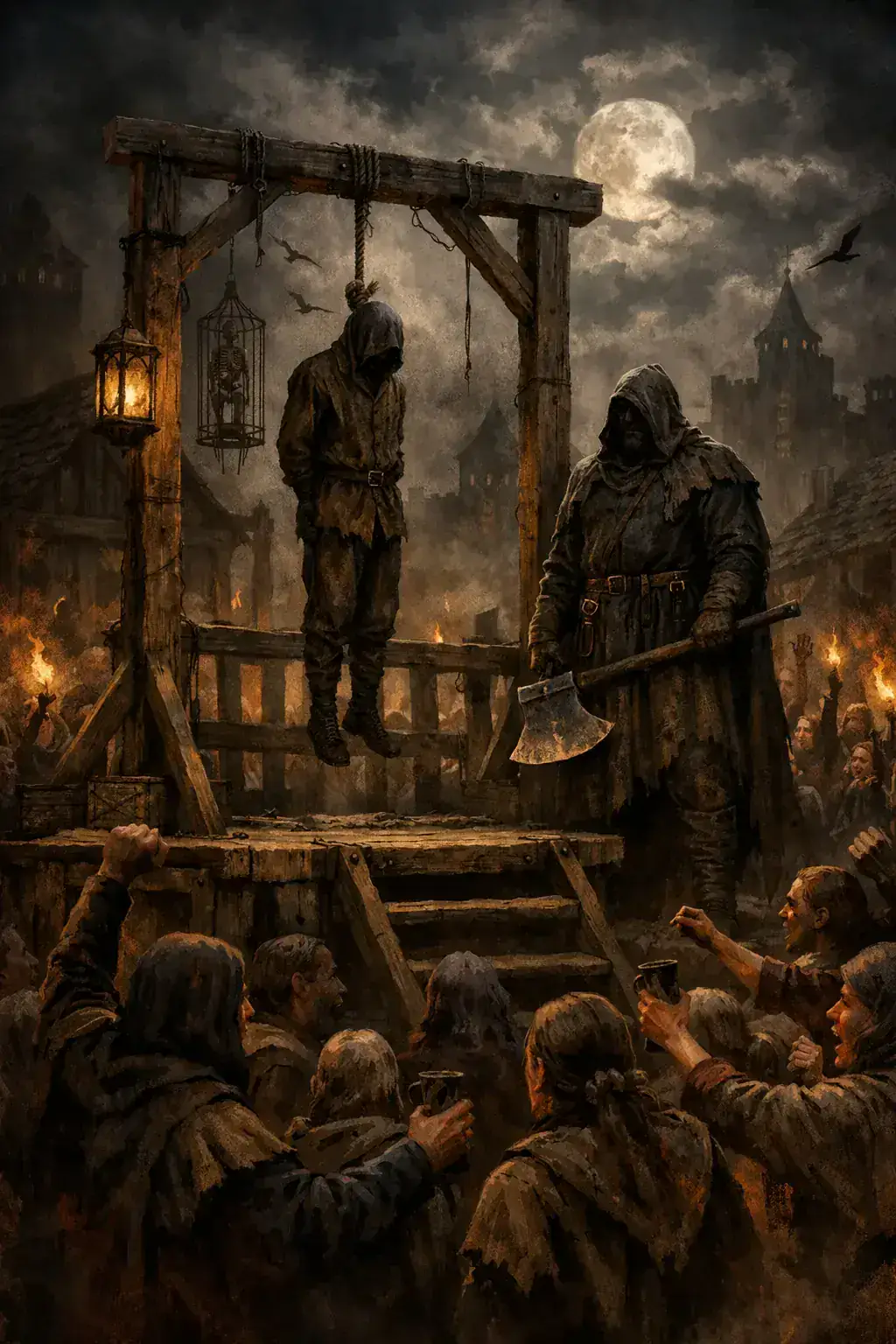
Foundation
The Spanish Inquisition was established by papal bull on November 1, 1478 — All Saints' Day — at the specific request of King Ferdinand II of Aragon and Queen Isabella I of Castile. Pope Sixtus IV authorized it, though he would later clash repeatedly with the Spanish monarchs over its conduct.
Its initial purpose was narrow and political: to investigate the conversos — Jewish converts to Christianity and, later, Muslim converts — who were suspected of continuing to practice their former faiths in secret. The Inquisition had jurisdictional authority only over baptized Christians; it could not technically try practicing Jews or Muslims, only apostates.
Torquemada
Tomás de Torquemada became the first Grand Inquisitor in 1483 and served until 1498. His name became synonymous with fanatical cruelty — a reputation earned partly by his actual conduct and partly by the political propaganda of Spain's enemies, particularly Protestant England and the Netherlands.
Under Torquemada, the Inquisition tried approximately 100,000 people. Modern historians estimate that between 1,000 and 2,000 were executed. Torquemada himself was rumored to have Jewish ancestry. The historical evidence is ambiguous. The irony has been noted extensively.
What Actually Happened
The Inquisition's procedures were, by the standards of their time, more legally regulated than secular criminal courts in most of Europe. The accused had the right to know the charges against them. They had the right to present a defense. Torture required specific authorization and was limited by rules. This is not a defense of the Inquisition. It is a clarification about what "regulated torture" actually looked like in practice.
The primary methods were:
- The Strappado — The accused's hands were tied behind their back, then they were hoisted by a rope attached to their wrists. Weights were sometimes added to their feet. The dislocation of the shoulders was systematic and documented.
- The Toca — Water was poured slowly over cloth covering the accused's face, producing the sensation of drowning. This is what modern practitioners call waterboarding. It has been in continuous use since at least the 15th century.
- The Garrucha — A variant of the strappado.
Confessions obtained under torture were required to be repeated without torture the following day to be considered valid. The system had internal rules. The rules did not make it humane.
The Iron Maiden Myth
The Iron Maiden — the spiked coffin-shaped device beloved of heavy metal iconography and popular history — almost certainly was not used by the Spanish Inquisition or by any Inquisition.
No contemporary account from the medieval or early modern period describes it in use. The existing Iron Maiden devices in European museums — including the famous Nuremberg Iron Maiden — are now believed by most historians to be 18th and 19th century theatrical constructions, assembled from unrelated medieval artifacts.
The Kremala's Inquisition mode uses the Iron Maiden as its visual centerpiece — not as historical accuracy but as historical mythology. The line "Nobody expects the Iron Maiden" acknowledges both the Monty Python reference and the gap between the Inquisition's reputation and its documented reality. History's myths are part of history.
Duration and Scale
The Spanish Inquisition formally operated for 356 years — from 1478 until its final abolition in 1834. During that period it tried an estimated 150,000 people across its various tribunals. The total number of executions is estimated at between 3,000 and 5,000 across the full 356 years — approximately 8–14 per year on average.
The Black Legend — the English and Dutch Protestant depiction of the Inquisition as uniquely monstrous — overstated its casualty counts significantly. The Spanish Inquisition was not the worst judicial institution of its era. It is simply the most famous one.
In The Kremala
The Inquisition chamber draws vocabulary from ecclesiastical Latin and the Counter-Reformation: heresy, abjuration, penance, confessor, tribunal, converso, Reconquista, Torquemada, Inquisitor. Play free at thekremala.com.